

Advanced brain assessment in Coquitlam
QEEG Brain Mapping
A personalized window into how your brain processes information, regulates emotion, and responds to the world around you.
Quantitative Electroencephalography measures patterns of electrical activity across the brain. At Touch Brain Counselor, these insights may help inform an individualized care plan alongside your clinical history, symptoms, and treatment goals.

QEEG findings are considered alongside the whole person—not used as a stand-alone diagnosis.
Professional assessment. Personalized care.
From Brain Recording to Clinical Insight
Our QEEG process combines careful data collection, specialized analysis, and professional interpretation to support a more informed understanding of each client.
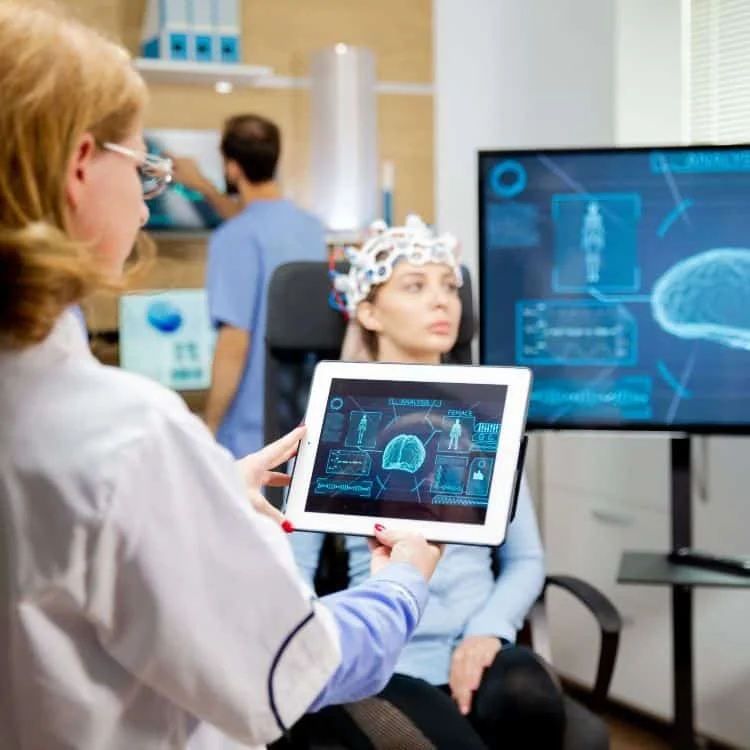 The recording process
How a QEEG Assessment Works
The recording is non-invasive and painless. A specialized cap containing small sensors is positioned comfortably on the scalp while natural electrical brain activity is recorded.
- Sensor preparation
Conductive gel or paste may be used to support clear signal quality and washes out easily.
- Quiet recording
Activity is typically recorded during short eyes-open and eyes-closed periods.
- Data processing
Artifacts such as blinking or muscle tension are reviewed before quantitative analysis.
 Professional interpretation
Why Choose Touch Brain Counselor?
QEEG findings are interpreted alongside clinical history, symptoms, and treatment goals—supporting care that is personalized rather than one-size-fits-all.
- Personalized protocols
Findings may help inform targeted neurofeedback planning when clinically appropriate.
- Focused care
Objective information can help the clinical team identify areas requiring closer attention.
- Progress comparison
Repeat mapping may provide additional information about patterns over time.
From recording to insight
How QEEG Brain Mapping Works
A QEEG assessment records patterns of electrical brain activity and organizes the data into visual maps. These findings can add objective information to the broader clinical picture.
 Recording & analysis
How the Assessment Works
- 1Comfortable sensor placement
Small sensors are positioned on the scalp using a specialized EEG cap.
- 2Brain activity recording
Electrical activity is recorded while the client rests or completes simple tasks.
- 3Pattern analysis
Specialized software organizes the recording into detailed visual maps for clinical review.
Clinical interpretation
Why QEEG Matters
- 1Personalized insight
Adds information about individual brain-activity patterns beyond symptoms alone.
- 2Informed care planning
May help guide an individualized plan alongside clinical history, goals, and professional assessment.
- 3Progress review
Repeat assessments may help clinicians compare patterns over time when clinically appropriate.
QEEG supports clinical understanding—it does not provide a stand-alone diagnosis. Findings are interpreted together with the whole person, including symptoms, history, and treatment goals.
Book a ConsultationUnderstanding your unique brain function
What Your QEEG Report Can Explore
A QEEG report organizes complex electrical activity into visual patterns that can add objective information to your clinical assessment and personalized care plan.

Personalized brain-based insight
More than data on a screen.
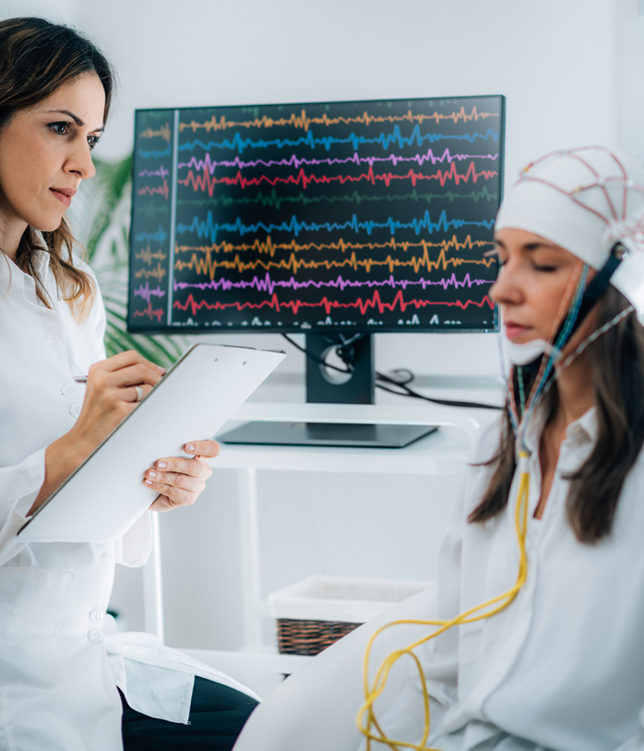
QEEG measures and analyzes electrical brain activity across different frequencies and regions. The resulting maps may help trained professionals recognize patterns that deserve closer clinical attention.
Findings are interpreted alongside your history, symptoms, strengths, and goals—not in isolation.
Brainwave Patterns
Reviews activity across frequencies such as Delta, Theta, Alpha, and Beta to identify patterns that may be higher or lower than expected.
Areas of Dysregulation
Highlights regions or networks that may show patterns of overactivity, underactivity, or instability for further interpretation.
Network Communication
Examines relationships between brain regions using measures such as coherence and phase to support a broader view of network activity.
Clinical Correlations
May reveal patterns relevant to concerns involving attention, mood, sleep, anxiety, or cognition, while not independently diagnosing those conditions.
Treatment Guidance
May help inform individualized neurofeedback protocols or other care decisions when combined with qualified clinical assessment.
Important: QEEG provides supportive assessment data and does not typically provide a stand-alone diagnosis. Conditions such as ADHD, anxiety, or mood disorders require comprehensive clinical evaluation.
Book an Appointment